There are picture books that entertain, and then there are picture books that change the temperature in the room. Awe! feels like the second kind. It is the kind of story you read and immediately want to pass along to a parent, a teacher, or a librarian and say, keep this one close. Not because it is flashy, but because it is grounding.
What I appreciate right away is the choice to center a single emotion that does not get named nearly enough in children’s books. Kids feel awe all the time. They just do not always have the vocabulary for it. Adults are the same, honestly. We are quick to label big feelings like anger or sadness, but awe is quieter and easier to miss, even though it can be one of the most powerful feelings we experience. Awe! gives that feeling a spotlight and treats it like something real, something valuable, and something children can recognize in their own lives.
The overall tone is gentle and reflective. It is not a book that tries to convince kids to feel a certain way. It feels more like an invitation to slow down and notice. Look up. Pay attention to what is happening around you. That matters. And the more I thought about that, the more I realized how rare it is for a book to give children permission to slow down without turning into a lecture. This one does not feel preachy. It feels like it trusts the reader.
As a read aloud, it has that soothing rhythm that makes kids lean in instead of bounce off the page. It is the kind of text you can read slowly and let the room breathe. Some books are meant for high energy storytime. This one is made for the moments when you want everyone to settle, connect, and feel something together. I can picture it working beautifully for bedtime, for a calm corner in the classroom, for a library storytime that needs a softer landing, or even as a reset after a tough day.
Susan Gal’s illustrations are a huge part of why the book works emotionally. The art carries warmth and tenderness. It feels like the pictures are holding the reader’s hand through the experience of noticing. The visuals pair well with a story about wonder because they allow space, and that space matters. Picture books about feelings can sometimes feel crowded, like they are trying too hard to prove the point. This one does not. The art supports the mood, keeps it accessible, and makes the book feel comforting instead of overwhelming.
What really stayed with me is the message underneath the message. Awe is not just a nice feeling. It can be a tool. When you are nervous, when you are frustrated, when you are stuck in your own head, awe pulls you outward. It widens your perspective. It reminds you that the world is bigger than the moment you are trapped in. For kids, that is not just poetic. That is practical. The ability to pause and notice something beautiful or surprising is a coping skill, and this book gently builds that skill without ever calling it that.
I also think this one is especially good for children who feel deeply. The kids who are sensitive, the kids who ask big questions, the kids who notice small details, the kids who get overwhelmed easily, the kids who are learning how to name what is happening inside them. Awe! does not pathologize those children. It honors them. It frames wonder as something to celebrate, not something to rush past.
If I were recommending this to someone in one sentence, I would say this. Awe! is a picture book that helps children name wonder, notice beauty in everyday moments, and feel steadier in a world that often moves too fast.
If I were recommending it in real life, I would probably say it like this. Keep this one for the days when you need something calm but meaningful. The days when you want a book that does not hype kids up, but instead helps them feel seen and connected to the world around them.
One simple way to carry the book beyond the last page is to make it a quick follow up moment. Read it, then ask one question and actually listen. What gave you awe today. You can follow with, where did you feel it in your body, or what did it make you want to do. You do not need to turn it into a big lesson. The book already opens the door, you are just letting kids step through it.
And if you want an easy activity that does not feel like homework, do a short awe walk. Five minutes, no rushing, and let kids point out one thing that feels surprising or beautiful. It can be a cloud, a bird, a shadow on the sidewalk, a small act of kindness, the smell of dinner, the sound of rain. That is what I love about this theme. Awe is not reserved for the grand and dramatic. It lives in ordinary life, and that is a powerful thing for children to learn.
In a time when so many books try to be loud, this one being quiet feels brave. Awe! is not just a sweet read. It is a useful one. It belongs on shelves that care about emotional vocabulary, mindful noticing, and stories that leave children feeling a little more rooted than they were before.
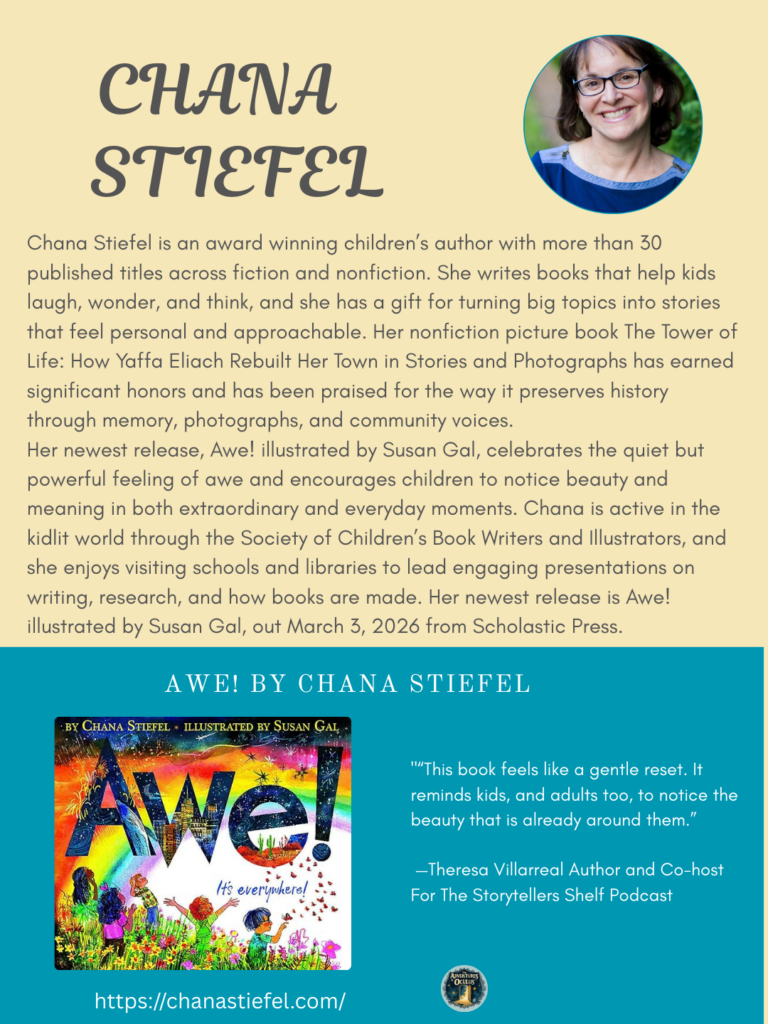
Learn more about Chana Stiefel and get your copy of Awe! It’s Everywhere!
Get Your Copy!